Launch offer — valid today only

📄 Digital book in PDF · read it on your phone or print it

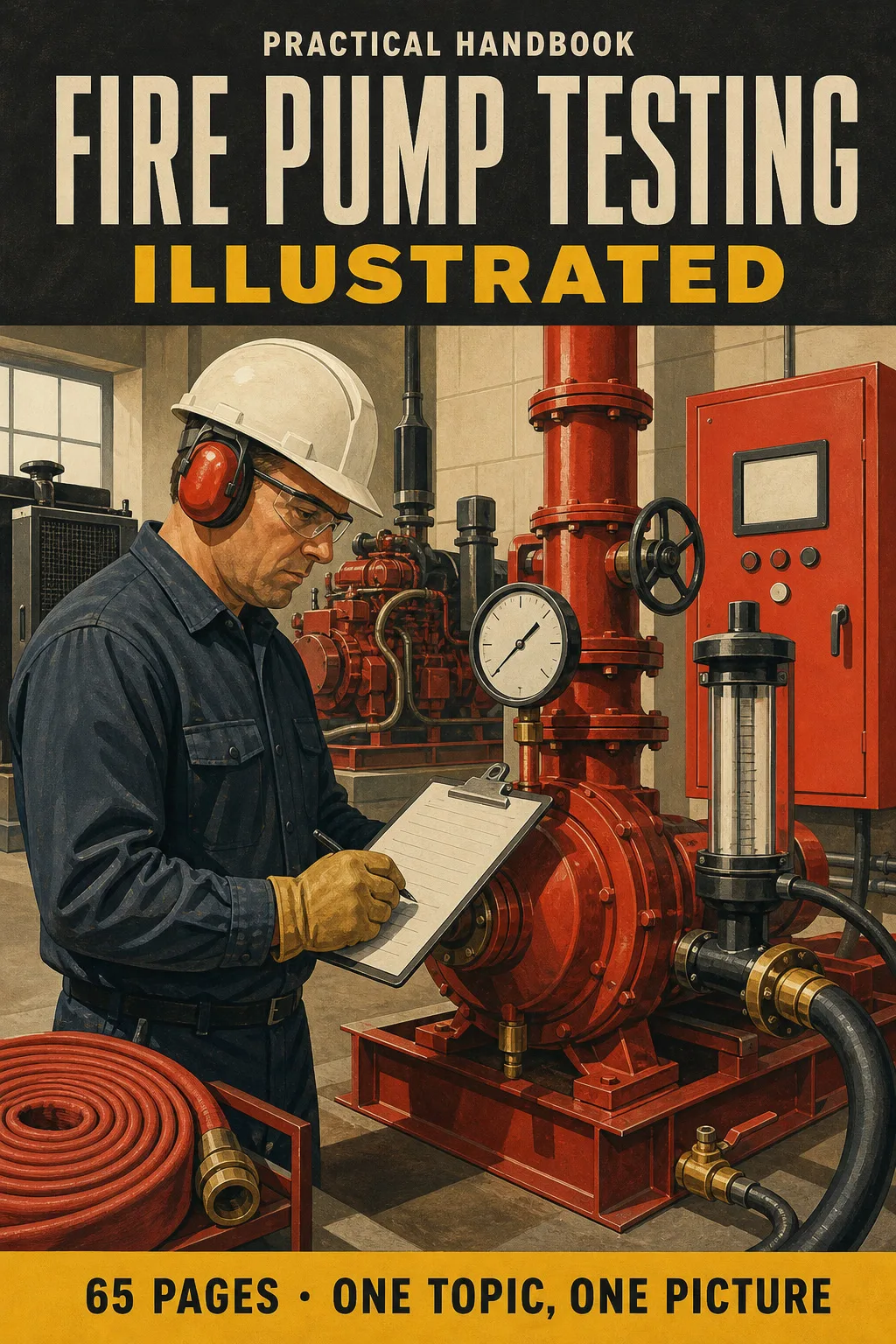
Fire Pump Testing in Drawings: the Weekly Churn and the Annual Flow Test The Same Order Every Time

The pump room, electric and diesel drivers, the controller, the jockey pump, gauges and nameplate, the weekly or monthly no-flow run, the 100% and 150% points and the pump curve. Each topic gets its own page: the drawing first, then what you need to remember. 65 illustrated pages.

START STUDYING IT THIS WAY

🔒 Secure checkout · PDF by email · 30-day guarantee
Every topic, its own pageEvery reading and every step drawn, with the explanation right beside it
65 illustrated pages8 parts, from the pump room at a glance to the numbers to have at hand
Up-to-date sourcesChecked against NFPA 25 (2023) and NFPA 20 (2022), with local AHJ items flagged
PDF by emailFormat

Look Inside the Book

Every page has one big drawing and a box with the numbers and steps you need to know:

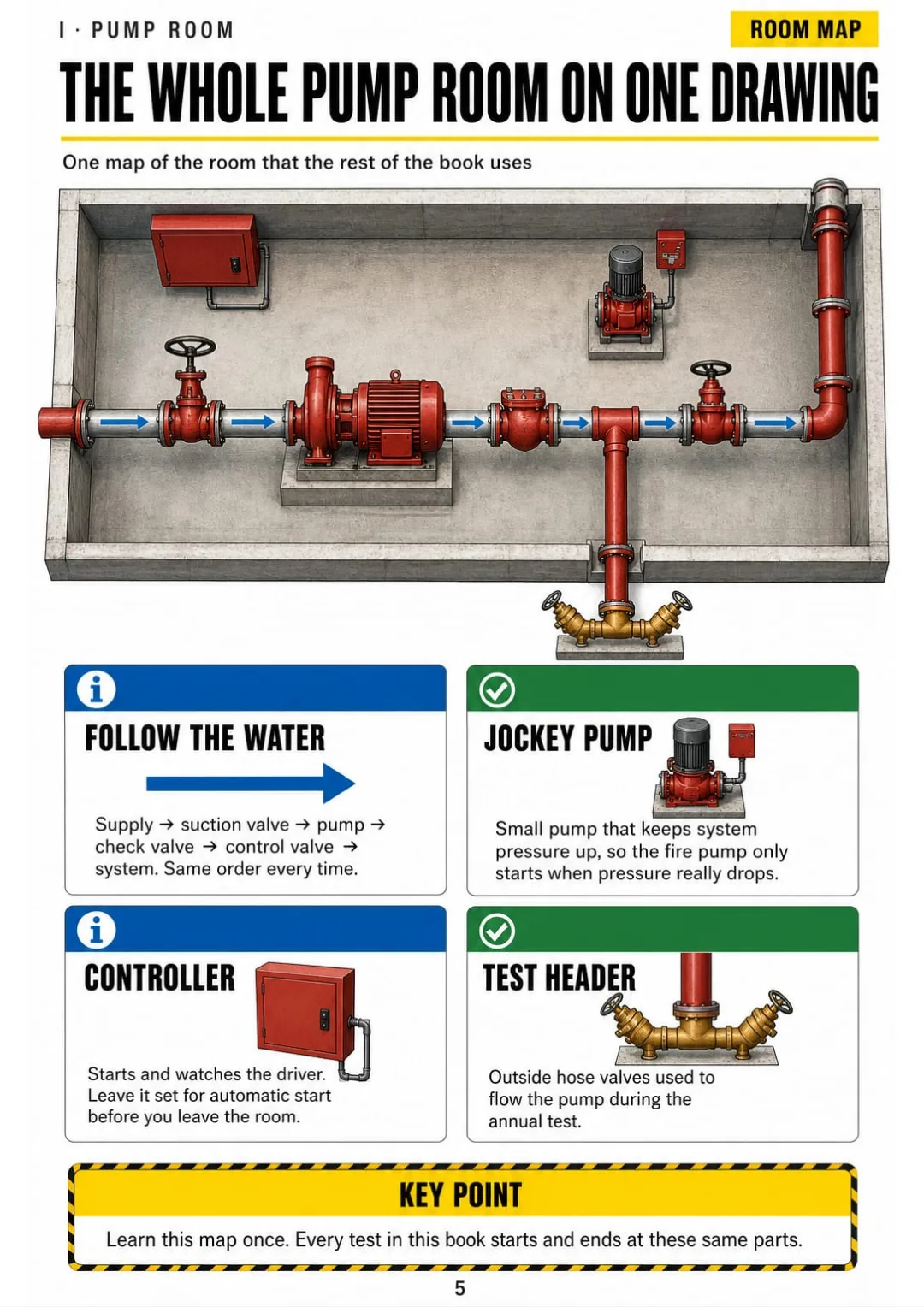
Suction, pump, driver, controller, jockey, discharge and test header in one plan
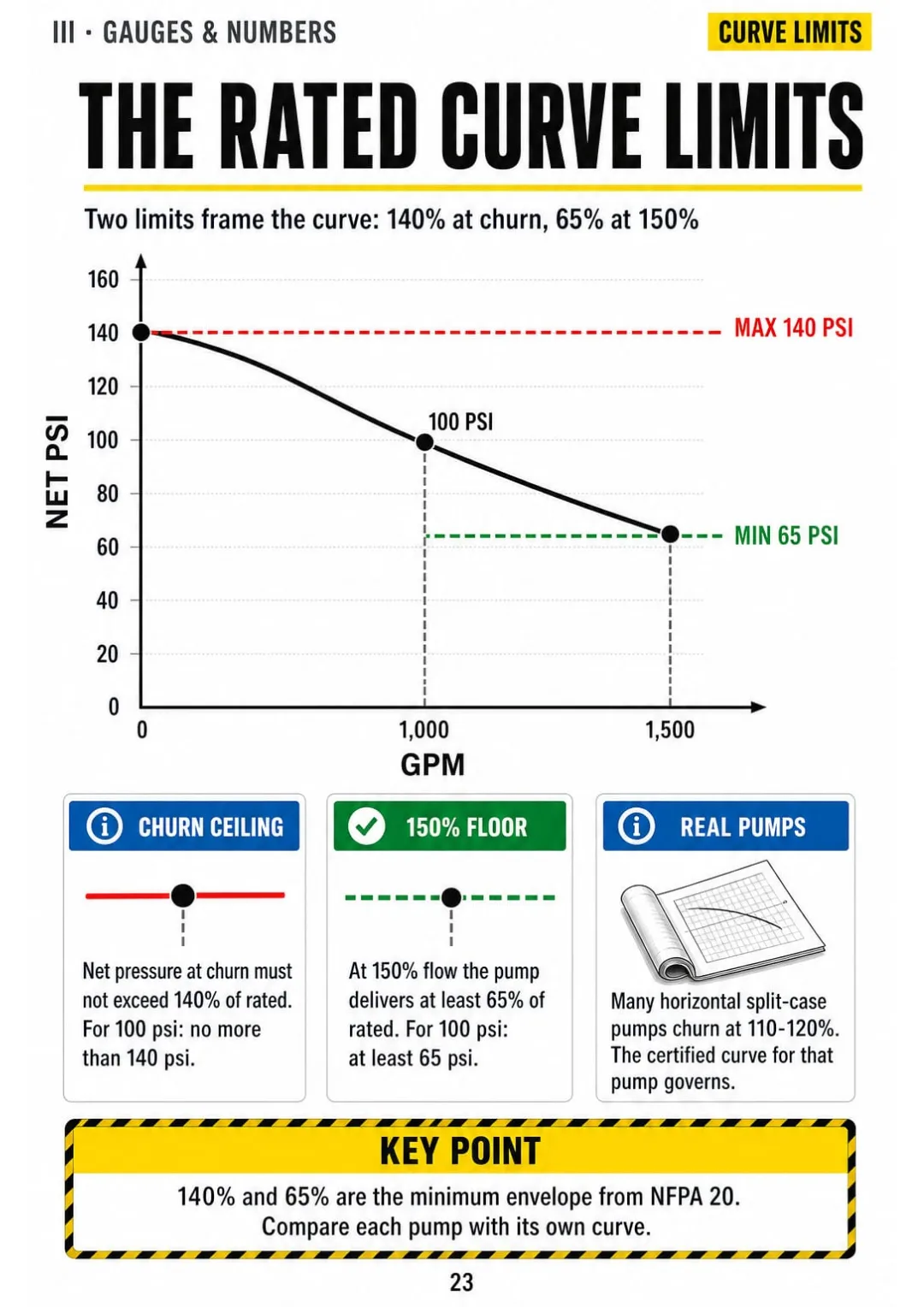
100 psi pump: no more than 140 psi at churn, at least 65 psi at 1,500 gpm.
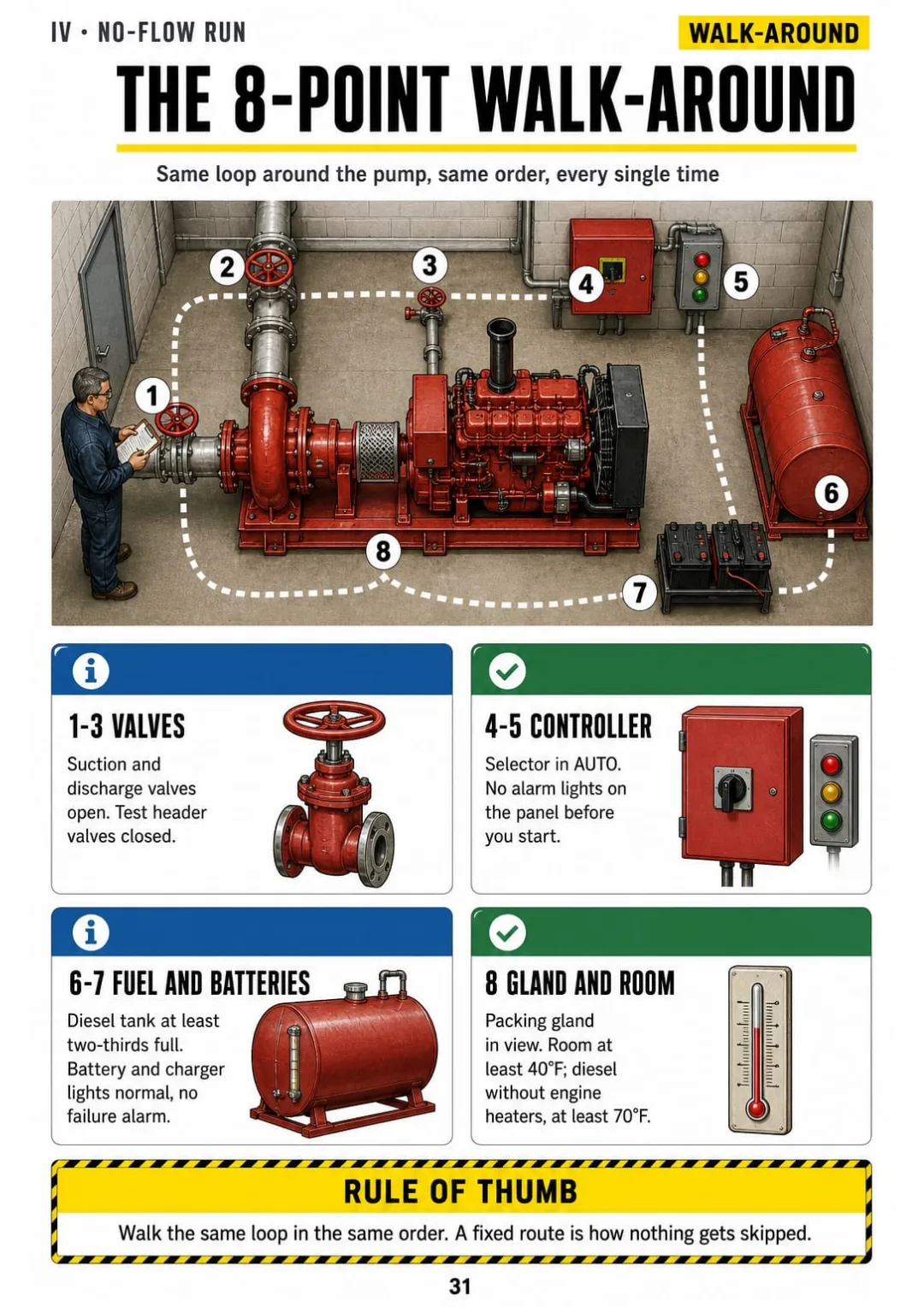
Valves open, header closed, AUTO, no alarms, fuel ≥ 2/3, batteries OK, gland visible, room ≥ 40°F.
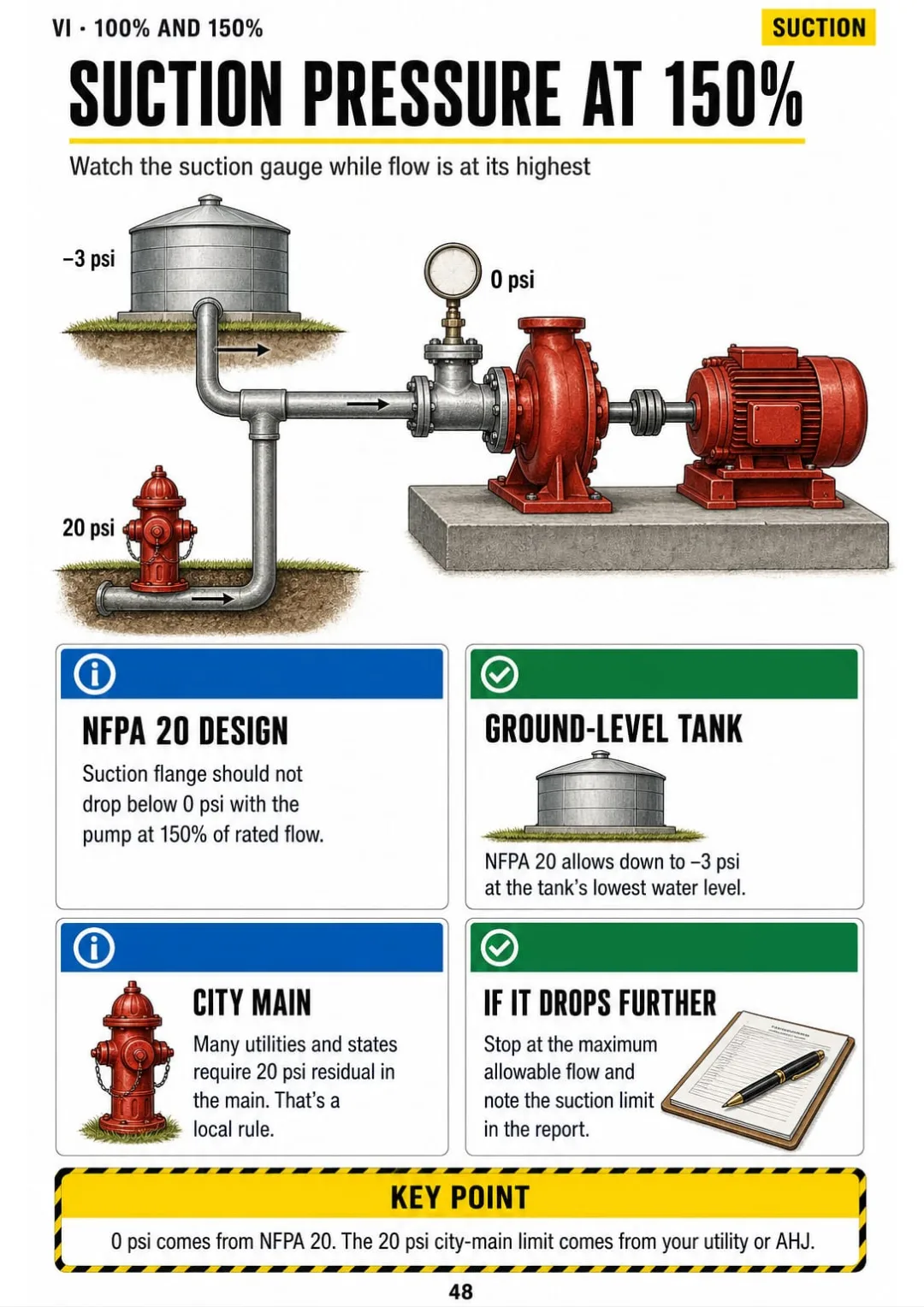
Suction at 150%: not below 0 psi; many utilities require 20 psi in the main
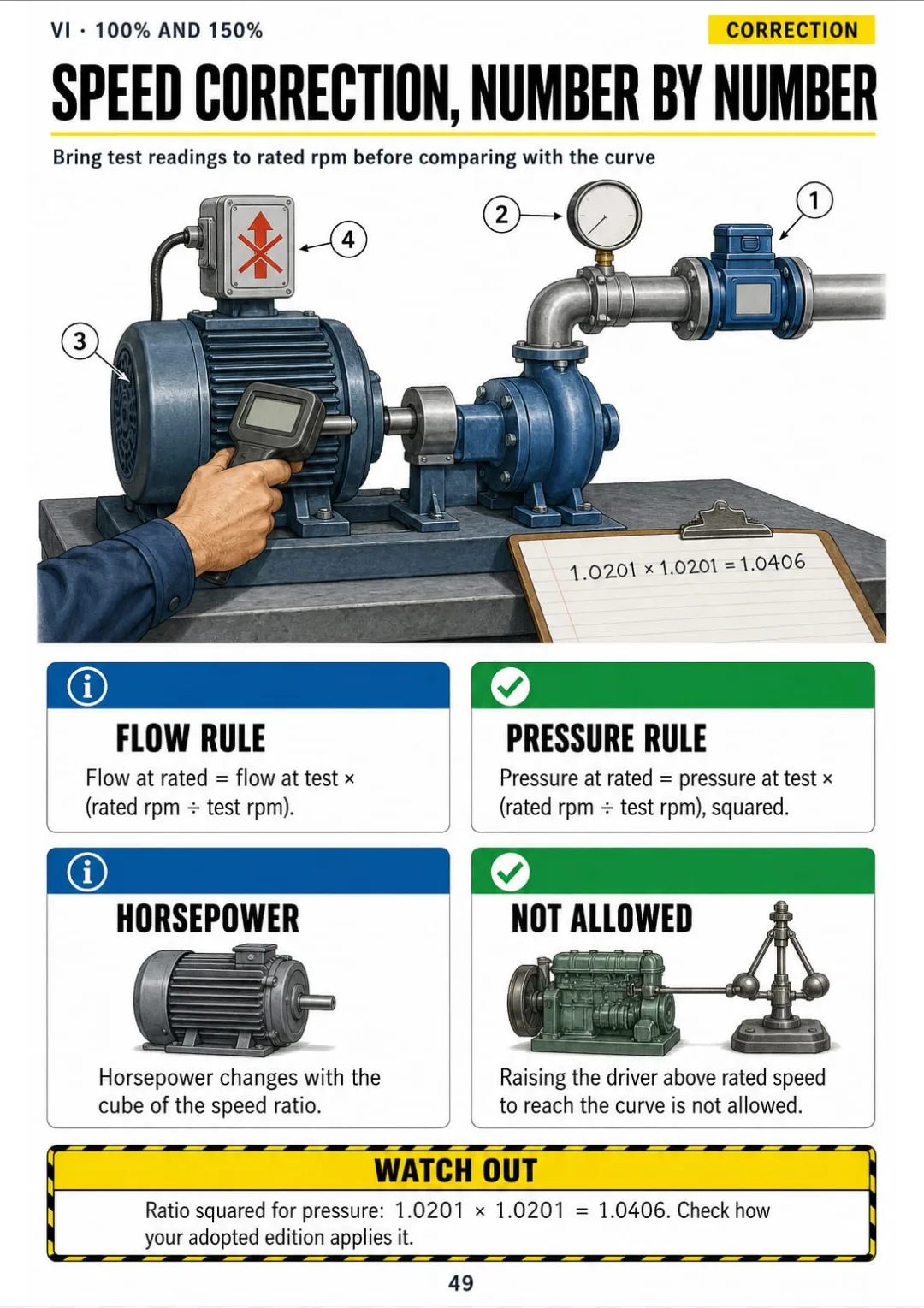
1,740 to 1,775 rpm: 1,000 gpm becomes 1,020; 95 psi becomes 98.9
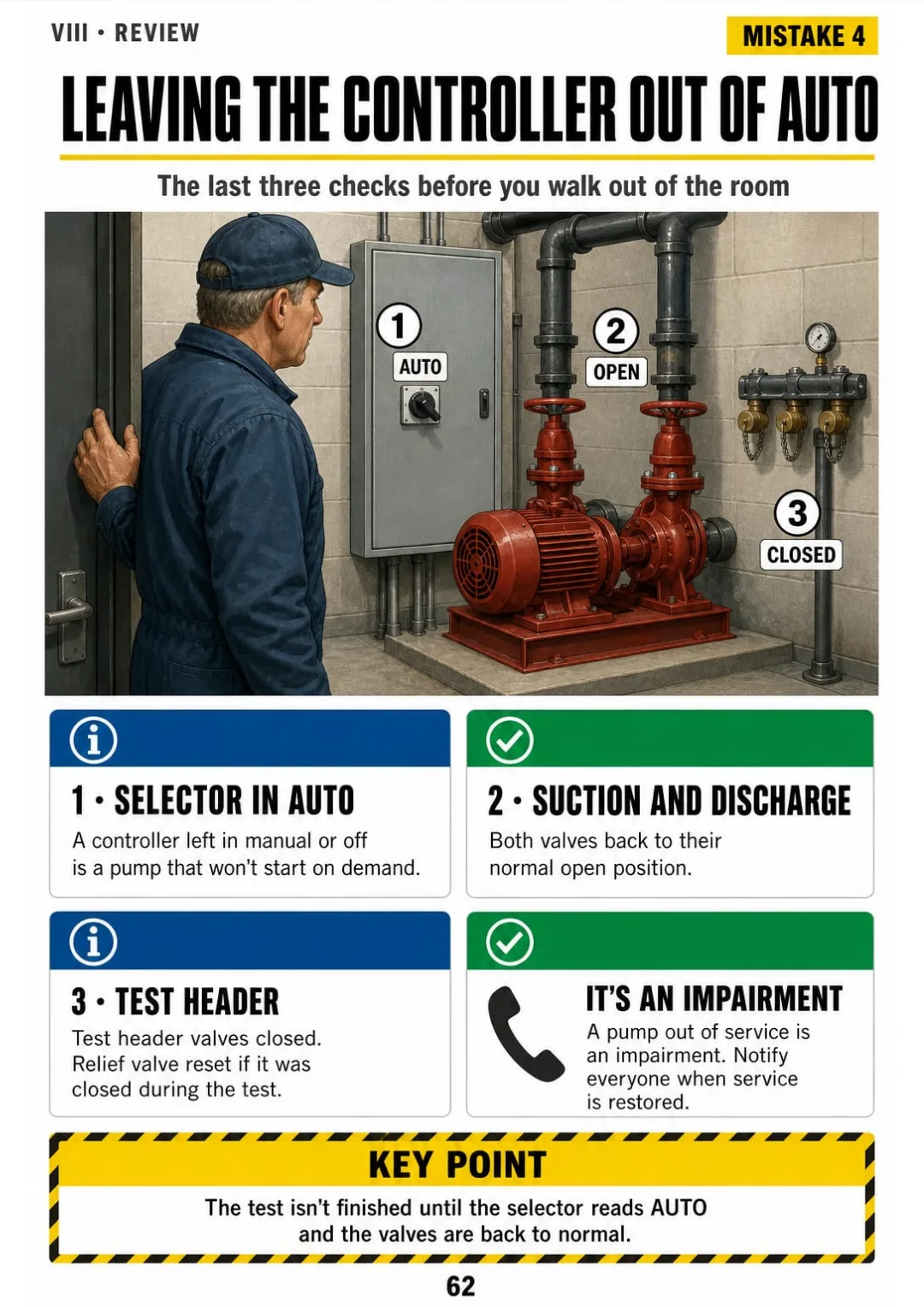
Selector in AUTO · suction and discharge open · test header closed.
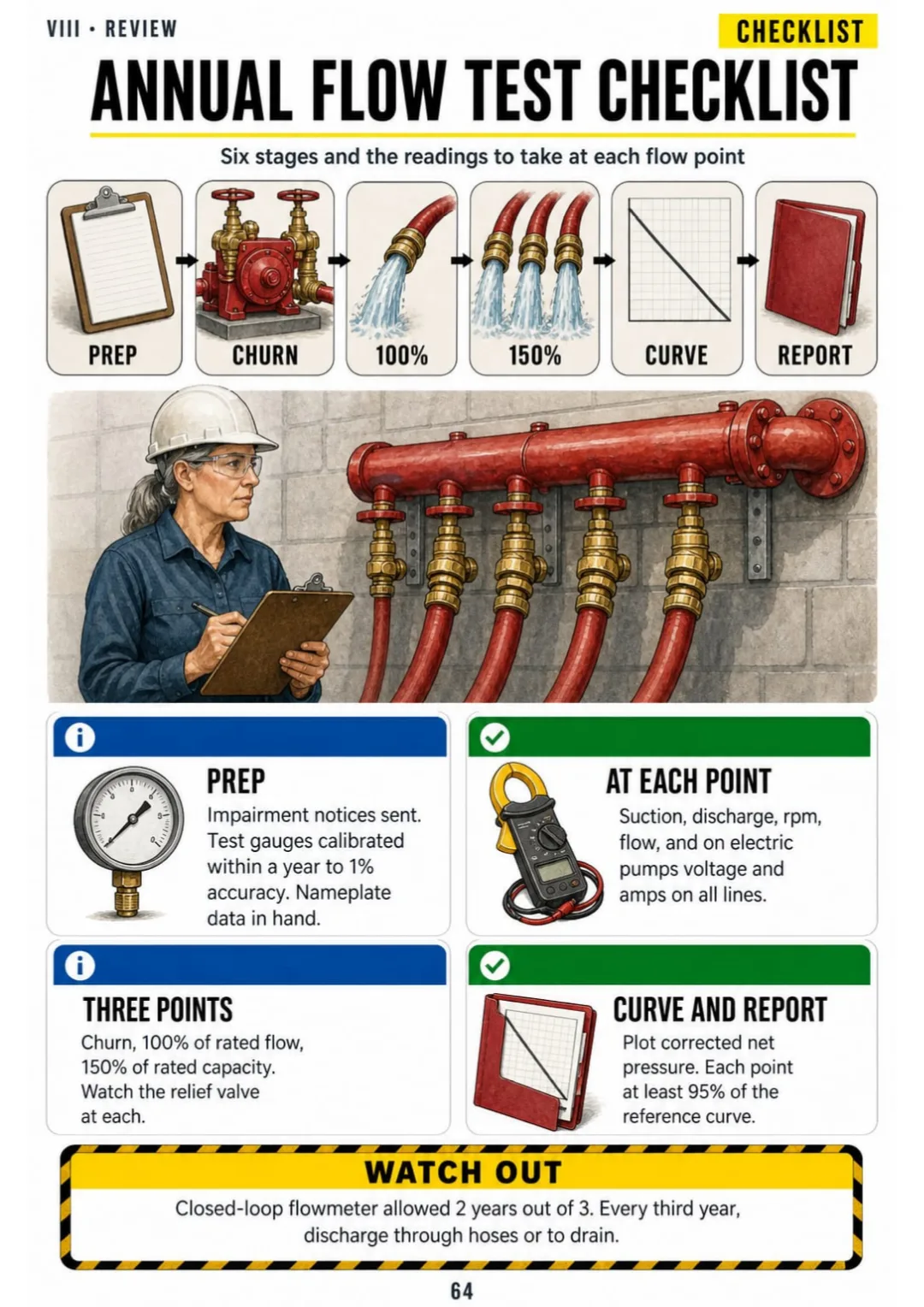
Prep → churn → 100% → 150% → curve → report, readings at each.
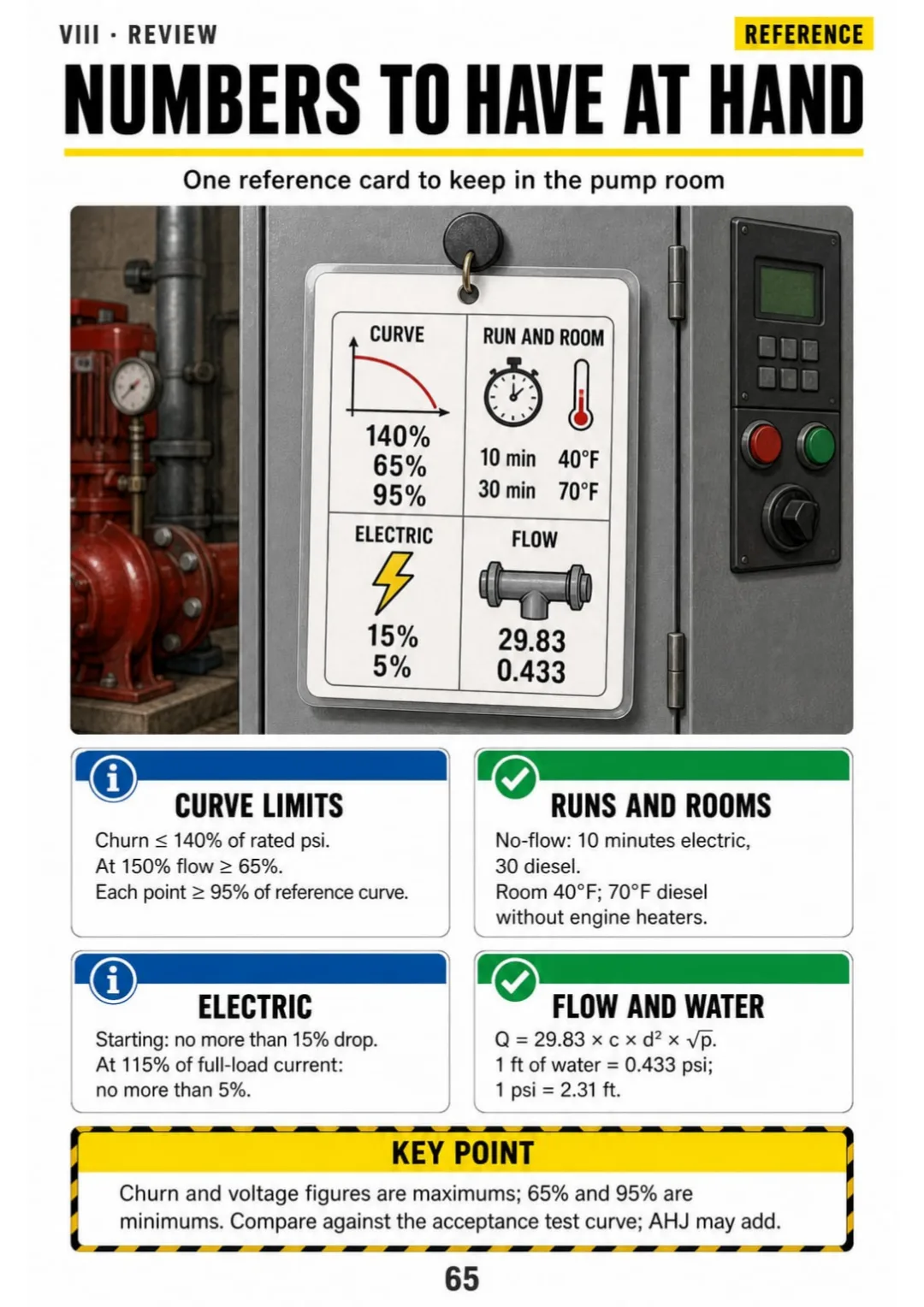
140% · 65% · 95% · 10/30 min · 40/70°F · 15%/5% · 29.83 · 0.433.

Swipe to see more →

These are real pages from the book. The table of contents is the full one: 8 parts and 61 topics.

The Problem Isn't You. It's How It Was Explained to You.

It's the weekly run. You're standing in front of the controller, hand near the start button, and you're not sure you checked everything that comes first.

The manual has it, spread over paragraphs: valves in one section, fuel in another, room temperature somewhere near the back. Read that way, nothing comes back in the right order.

Valves open, header closed, AUTO, no alarms, fuel ≥ 2/3, batteries OK, gland visible, room ≥ 40°F.

In the book, the walk-around is one page: eight points drawn around the room. Valves open, test header closed, controller in AUTO, no alarms, fuel at 2/3 or more, batteries OK, packing gland visible, room at 40°F or more.

Every other topic works the same way: the pitot formula, the speed correction, net pressure, the rated curve limits and the annual test checklist, each on its own page.

You walk the room, tick the eight points and start the run. You know why each check is there, and you never reach for the manual.

COMPARE FOR YOURSELF

Same Topic, Two Ways to Learn It

THIS
  • The manual: line after line
  • Curve limits explained only in words
  • You show up to the annual test unsure
For any centrifugal fire pump, the pressure developed at zero flow is limited to a maximum of 140 percent of the rated net pressure, while at a flow equal to 150 percent of rated capacity the net pressure developed must remain at or above 65 percent of rated. Evaluation of conformity therefore requires that field readings, once converted to net values and corrected to rated speed, be compared against both boundaries and against the certified shop curve supplied by the manufacturer, with any departure recorded.
FOR THIS
  • The rated curve in one drawing
  • The limits in one box: 140% and 65%
  • You see it and you get it
100 psi pump: no more than 140 psi at churn, at least 65 psi at 1,500 gpm.
CONTENTS

Take a Look at the 8 Parts and 61 Topics

The pump room, drivers and controller, gauges and nameplate, the churn test, the annual flow test from setup to 150%, the curve and the report, and a review with checklists: 65 pages, all illustrated

IThe Pump Room at a Glance · pp. 5-12
  1. The whole pump room on one drawing
  2. Why a fire pump exists
  3. Horizontal split-case, end-suction, vertical in-line, vertical turbine
  4. Suction side: what must be open
  5. Discharge side: check valve to system
  6. The test header and the flow meter loop
  7. Room conditions you check before anything else
  8. Who does what: owner, contractor, AHJ, insurer
IIDrivers, Controller and Jockey · pp. 13-20
  1. Electric driver: motor, shaft, coupling
  2. Electric controller: the panel read left to right
  3. Transfer switch and the second power source
  4. Diesel driver: the engine in six systems
  5. Diesel controller: alarms you must recognize
  6. Automatic start vs manual start
  7. The jockey pump and its pressure settings
  8. Start sequence drawn as a pressure ladder
IIIGauges, Nameplate and the Numbers · pp. 21-28
  1. Reading the pump nameplate
  2. The three test points from the nameplate
  3. The rated curve limits in one picture
  4. Suction gauge vs discharge gauge
  5. Net pressure: discharge minus suction
  6. Gauge accuracy and calibration
  7. Measuring speed: tachometer and why rpm matters
  8. Electric readings: voltage and amps under load
IVThe No-Flow Run (Churn Test) · pp. 29-36
  1. How often: weekly or monthly
  2. How long: 30 minutes diesel, 10 minutes electric
  3. Before you start: the walk-around
  4. Starting it: drop pressure, watch the start
  5. What to read while it runs
  6. Packing gland: drip is normal, a stream is not
  7. Diesel extras during the run
  8. Shutdown and back to auto
VAnnual Flow Test: Setup and Churn · pp. 37-43
  1. The annual test method in six steps
  2. Paperwork before you open a valve
  3. Notifications and impairment
  4. Three ways to measure flow
  5. Setting up hoses and playpipes
  6. Churn point: what you record
  7. Circulation relief and main relief valve at churn
VIAnnual Flow Test: 100% and 150% · pp. 44-51
  1. Pitot formula drawn step by step
  2. Adding up several outlets
  3. Reaching 100%: throttle, read, write
  4. Reaching 150%: the point that shows the truth
  5. Suction pressure at 150%
  6. Speed correction with the affinity laws
  7. The 95% comparison
  8. Diesel and electric data at full load
VIIPlotting the Curve and the Report · pp. 52-58
  1. Setting up the graph
  2. Plot the factory curve first
  3. Plot your corrected test points
  4. Reading the gap between the two curves
  5. When the test fails: what comes next
  6. The annual report: what has to be on it
  7. Records: how long and where
VIIIReview, Checklists and Frequent Mistakes · pp. 59-65
  1. Frequent mistake: plotting discharge instead of net
  2. Frequent mistake: skipping the speed correction
  3. Frequent mistake: wrong nozzle coefficient or tip size
  4. Frequent mistake: leaving the controller out of auto
  5. No-flow run checklist
  6. Annual flow test checklist
  7. Numbers to have at hand

One Page, One Topic, All Clear

Think of it this way:

It's the annual flow test. The hoses are out, the pump is running at 150% and you need that pitot reading turned into gpm before anyone asks.

You open the page on the pitot formula and it's there box by box: the 1-3/4 in tip, the 0.97 coefficient, 50 psi on the gauge, about 627 gpm.

1,740 to 1,775 rpm: 1,000 gpm becomes 1,020; 95 psi becomes 98.9

Same with the walk-around, net pressure, the speed correction, the rated curve limits and the annual checklist: each one has its own page.

Fire Pump Testing Illustrated is 8 parts and 61 topics, all drawn, and it ends with the frequent mistakes, two checklists and the numbers to have at hand.

What you see drawn, you don't have to memorize.

What's Inside Fire Pump Testing Illustrated:

Ipp. 5-12

The Pump Room at a Glance

The whole pump room on one drawing, the four pump types, suction and discharge sides, the test header and flow meter loop, room conditions and who does what.

IIpp. 13-20

Drivers, Controller and Jockey

The electric motor and controller, the transfer switch, the diesel engine in six systems, diesel alarms, automatic vs manual start, the jockey pump and the start sequence as a pressure ladder.

IIIpp. 21-28

Gauges, Nameplate and the Numbers

The nameplate and its three test points, the rated curve limits, suction vs discharge gauges, net pressure, gauge accuracy, rpm and electric readings under load.

IVpp. 29-36

The No-Flow Run (Churn Test)

How often and how long, the walk-around, starting the pump, what to read while it runs, the packing gland, diesel extras and back to AUTO.

Vpp. 37-43

Annual Flow Test: Setup and Churn

The annual method in six steps, paperwork and impairment notices, three ways to measure flow, hoses and playpipes, the churn point and the relief valves.

VIpp. 44-51

Annual Flow Test: 100% and 150%

The pitot formula step by step, adding outlets, reaching 100% and 150%, suction pressure, speed correction, the 95% comparison and full-load driver data.

VIIpp. 52-58

Plotting the Curve and the Report

Setting up the graph, the factory curve first, your corrected points, reading the gap, what happens when a test fails, the annual report and records.

VIIIpp. 59-65

Review, Checklists and Frequent Mistakes

Four frequent mistakes drawn and fixed, the no-flow run checklist, the annual flow test checklist and the numbers to have at hand.

At the end of the book: Four frequent mistakes worked through, two printable checklists and one page of numbers to have at hand.

Plus: 2 Free Books

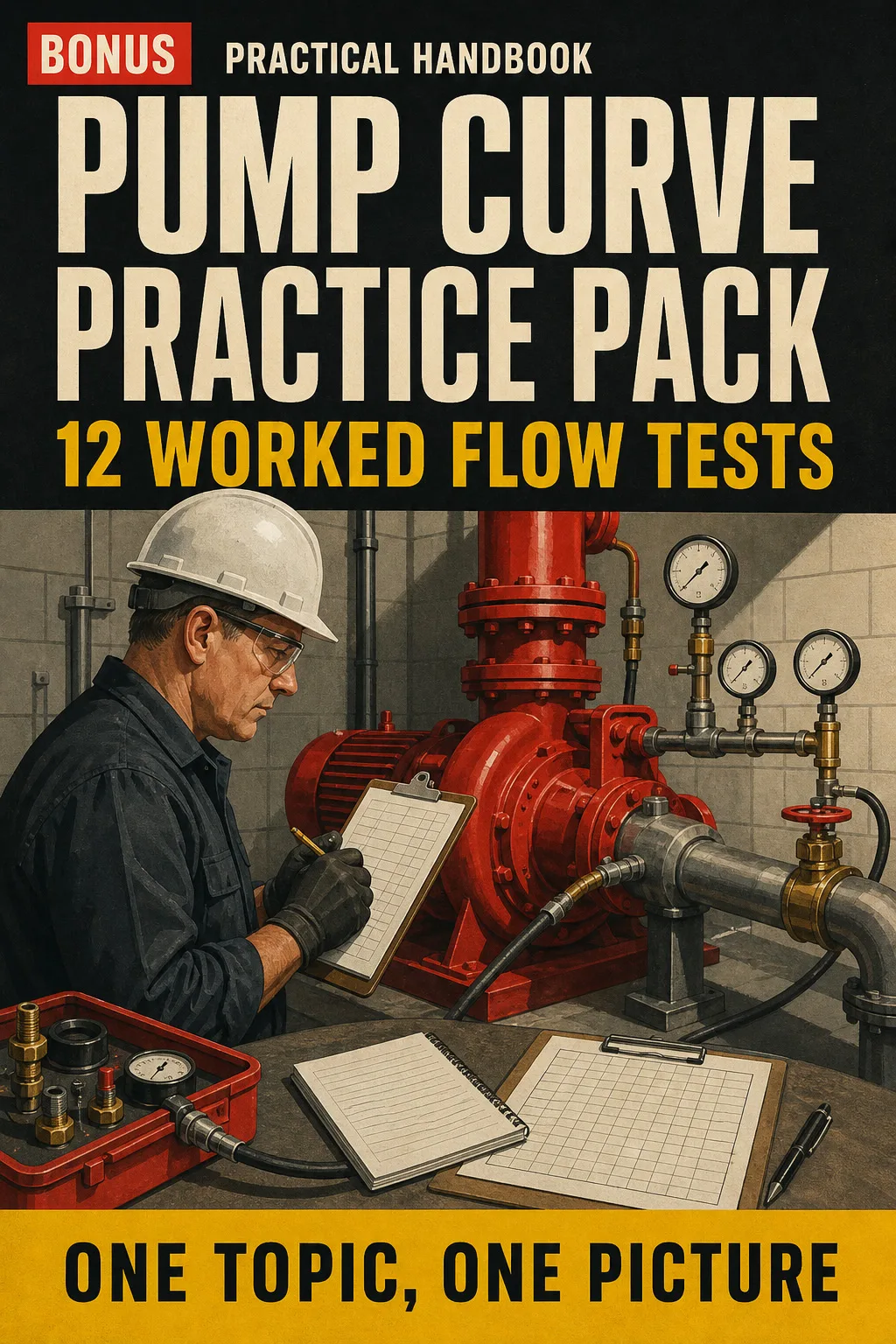
Pump Curve Practice Pack: 12 Worked Flow Tests

BONUS 1: «Pump Curve Practice Pack: 12 Worked Flow Tests»

Value on its own: US$ 17.90

Twelve real-style test readings to plot on a blank graph and check against the answer page, so you've already drawn the curve a dozen times before the next annual test.

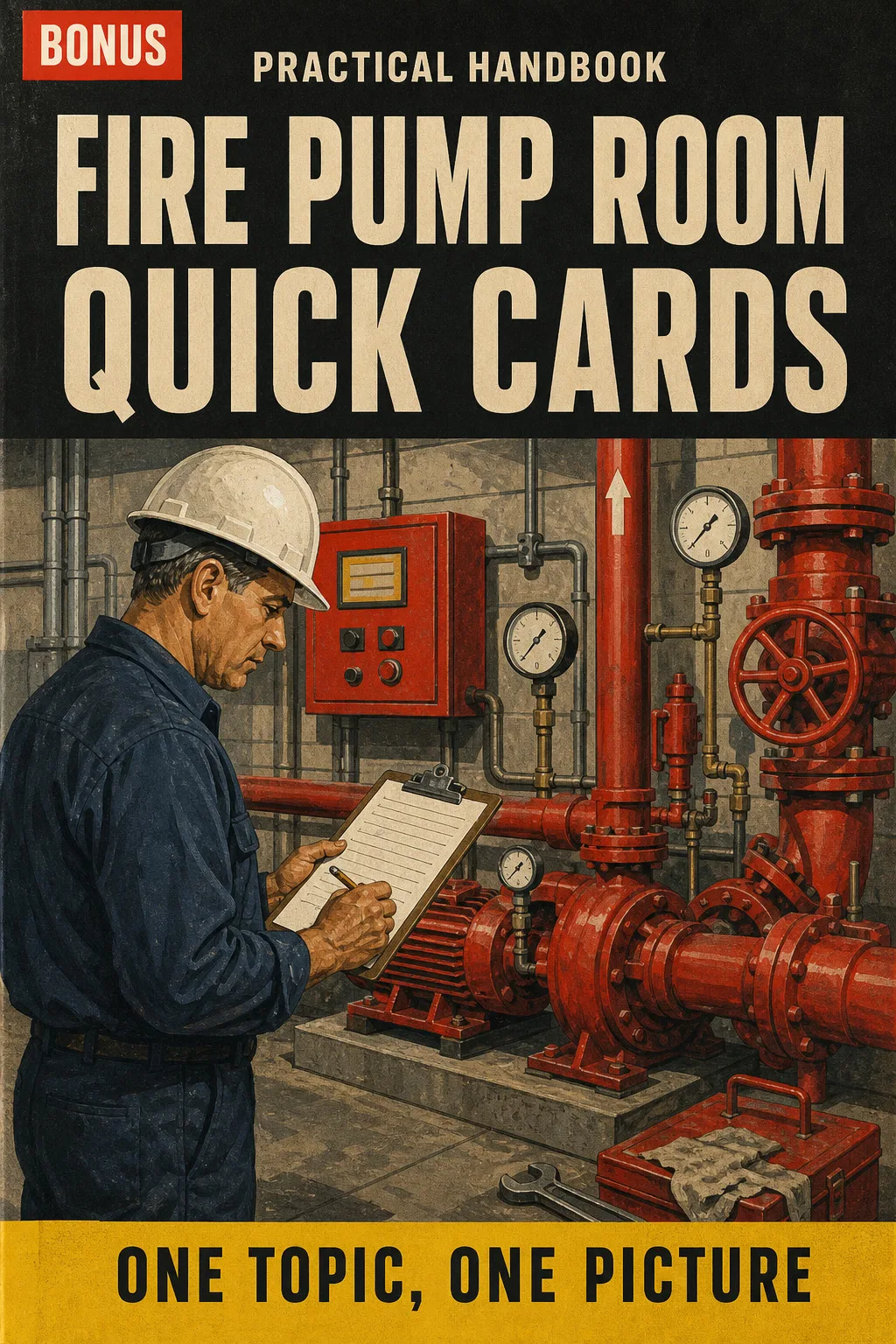
Fire Pump Room Quick Cards

BONUS 2: «Fire Pump Room Quick Cards»

Value on its own: US$ 14.90

One printable card per step of the weekly and annual test, to keep in the pump room and run every test in the same order at a glance.

Fire Pump Testing Illustrated with 2 Free Books

  • Fire Pump Testing Illustrated: 65 illustrated pagesUS$ 63
  • BONUS 1: Pump Curve Practice Pack: 12 Worked Flow TestsUS$ 17.90
  • BONUS 2: Fire Pump Room Quick CardsUS$ 14.90
  • High-resolution PDF to printIncluded
Total value US$ 95.80
YOUR PRICE:
US$ 27
You save US$ 68.80
YES, I WANT FIRE PUMP TESTING ILLUSTRATED FOR US$ 27

📄 This is a digital PDF book sent to your email: nothing is printed or shipped.

Secure purchaseEncrypted payment30-day guarantee

PDF by email: We email you Fire Pump Testing Illustrated as a PDF, together with the two free books. It's a single payment: no installments, no extra charges.

Who This Book Is For

You just got handed the pump room

You just got handed the pump room

The whole room on one drawing and the weekly run in the same order every time, so you know what each valve, gauge and light is doing.

The annual flow test is coming up

The annual flow test is coming up

The six-step method, the pitot formula and the speed correction worked in gpm and psi, so you walk in with the order already in your head.

You've run tests for years

You've run tests for years

The rated curve limits, net pressure and the frequent mistakes in one place, printed and kept in the pump room for a quick check.

Everything You Get Today

US$ 95.80US$ 27
YES, I WANT FIRE PUMP TESTING ILLUSTRATED FOR US$ 27

📄 This is a digital PDF book sent to your email: nothing is printed or shipped.

30DAYS
GUARANTEE

30-Day Guarantee

Try Fire Pump Testing Illustrated for 30 days, bonus books included.

We refund everything if the file won't open, if the book isn't what you see here, if you were charged twice or if the email doesn't arrive. Just email us.

You pay once. No subscriptions.

Frequently Asked Questions

Is it for me if I already run the weekly churn but only do the annual flow test once a year?

Yes. The book starts from the pump room you already know and spends most of its pages on the annual test: setup, churn, 100%, 150%, the curve and the report, worked in gpm and psi.

Where does the content come from?

It's checked against NFPA 25 (2023 edition) and NFPA 20 (2022 edition), explained with our own drawings. Your AHJ or insurer may enforce an older or newer edition and add its own requirements, so every interval and limit in the book is flagged for you to check against the edition your AHJ has adopted.

Is this official material?

No. It's an independent illustrated book. It is not affiliated with or endorsed by NFPA or any authority having jurisdiction.

Does it replace training?

No. It doesn't replace hands-on training, the manufacturer's instructions, the standards themselves or the requirements of your AHJ. It's a visual study and reference book: it doesn't come with a certificate or continuing education credits.

Are the practice flow tests real test data?

No. The 12 worked flow tests in the bonus are written for this book so you can practice plotting the curve. They are not data from any real pump or inspection.

When and how does it arrive?

The book and the 2 bonus books arrive as PDFs by email, to the address you enter at checkout.

Do I have to pay every month?

No. It's a one-time payment. No subscription.

Can I have it on paper?

Yes. The PDF is laid out to print, so you can keep a copy and the checklists in the pump room.

How does the refund work?

You have 30 days. We refund everything if the file won't open, if the book isn't what you see on this page, if you were charged twice or if the email doesn't arrive: just email us.

Before You Close This Page

No more rereading with nothing sticking.

The walk-around, the pitot formula and net pressure: you see them drawn, and that's it.

You walk into the pump room knowing where everything is.

Drawings make studying faster.

The book is right below.

One-time payment: US$ 27 · Guarantee: 30 days · PDF by email

YES, I WANT FIRE PUMP TESTING ILLUSTRATED FOR US$ 27

📄 This is a digital PDF book sent to your email: nothing is printed or shipped.